OSR Diaries: Tim Hayward
Meet Tim Hayward as he shares his journey trying to balance challenges from the weather, weeds, pests and diseases with growing a profitable OSR crop.
About Tim
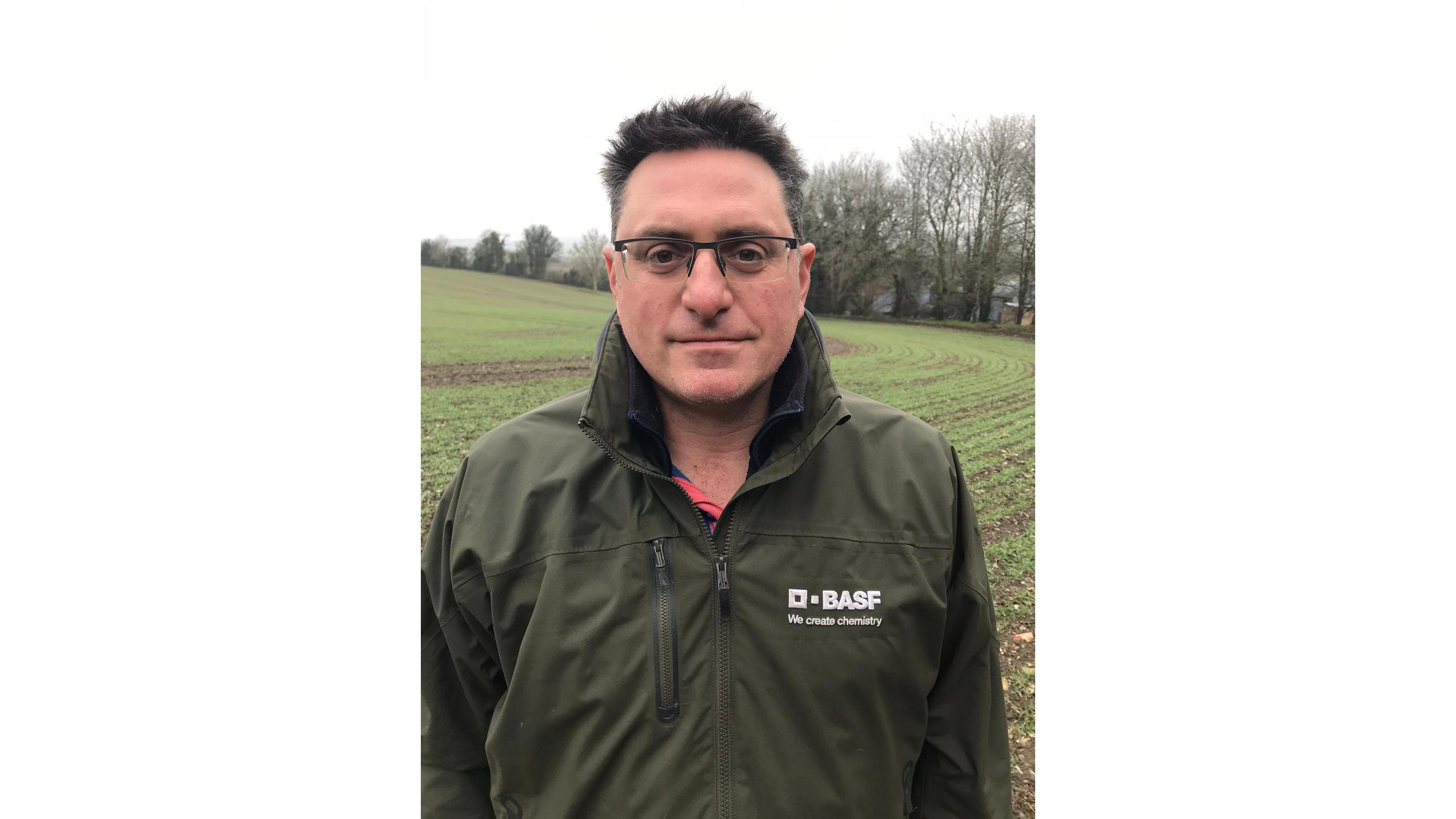
Tim was brought up on a family farm on Salisbury Plain. There wasn’t a clear route into the business so Tim has forged a career as a farm manager. Tim has a National Diploma in Agriculture from Lackham College and is BASIS and FACTS qualified. He has been managing farms for over 10 years. From the financial aspects of running a business and grain marketing, to agronomy and the practical ‘hands on’ activities, Tim enjoys the variety farm management offers.
Tim took on the 600ha farm 5 years ago. Located in West Berkshire, it sits on predominantly stony, flinty chalk soils. The farm is part of a larger estate which also runs two woodchip boilers, a woodchip biomass supply business and both commercial and residential properties.
Tim describes black-grass as his most troublesome weed. Being a ‘cold late farm’ aphid pressure isn’t usually too much of a problem, though deer and rabbits are. In recent years cabbage stem flea beetles have proved problematic and have been the driving force behind his reduction of inputs and costs.
When it comes to diseases, Tim explains that the farm typically has moderate Septoria pressure. In his spring barley, rhynchosporium is the dominant disease while in his oilseed rape, it’s a combination of phoma, light leaf spot and sclerontinia.
Oilseed rape has been a long-standing feature of the rotation at Tim’s farm where alternative break crops are limited. He grows some beans but the land is a little light, it’s also too stony for peas and maize isn’t economically viable for him.
Over the years there have been significant changes to the way Tim grows oilseed rape. He has moved to direct drilling into chopped wheat straw and long stubbles, reverted from hybrid varieties to home-saved conventional seed. He has also removed the autumn residual herbicides and insecticides from his spray program and now, Tim is trying to reduce fungicide applications. He has also tried growing companion crops alongside his oilseed rape but felt they brought few benefits.
Historically Tim expected yields of 4t/ha, today with lower inputs, he excepts a lower yield but with the lower costs, hopefully a similar margin.
Wheat, oilseed rape, spring barley and winter beans
About the farm
Cropping
Farming Philosophy
Tim’s primary focus has always been yield and output but admits he has been on a journey during the last 10 years. “Today we’re much more focused on the environment and balancing our impacts with our outputs. It’s quite a change but I always like to be learning and trying to find new techniques.”
Tim uses a mixture of shallow cultivations and direct drilling.
Crop rotation has changed in recent years and now includes two spring barleys as well as sheep on tack on cover crops over the winter.
Establishment and CSFB in the first instance, once it is away from those, it’s the pigeons that cause Tim the most issues.
Cultivation and drilling approach.
Rotation
Biggest agronomic challengesto growing OSR
This element above contains content from Youtube and transmits data to Youtube. You can block this in the privacy policy.
OSR Diary 1

This element above contains content from Youtube and transmits data to Youtube. You can block this in the privacy policy.
OSR Diary 2

This element above contains content from Youtube and transmits data to Youtube. You can block this in the privacy policy.
OSR Diary 3