Cereal Disease Control Solutions
Wheat Fungicide Facts
Click on the links below to find out more about the wheat timings and growth stages:
T0 Cleans-up the crop in specific situaltions to reduce pressure on the rest of the programme and provide more flexibility of T1 sprays
- T1 Essential. Sets the crop up and maintains potential yield
- T2 Essential. Keep the main yield-producing leaves free of disease
- T3 Prevent the crop from late yield robbers and maintains grain quality
On average, T2 is the most important, followed by T1, then T3. In addition, T0 is a very sound extra investment at little cost in high early-risk situations.
Wheat growth stage ID explained
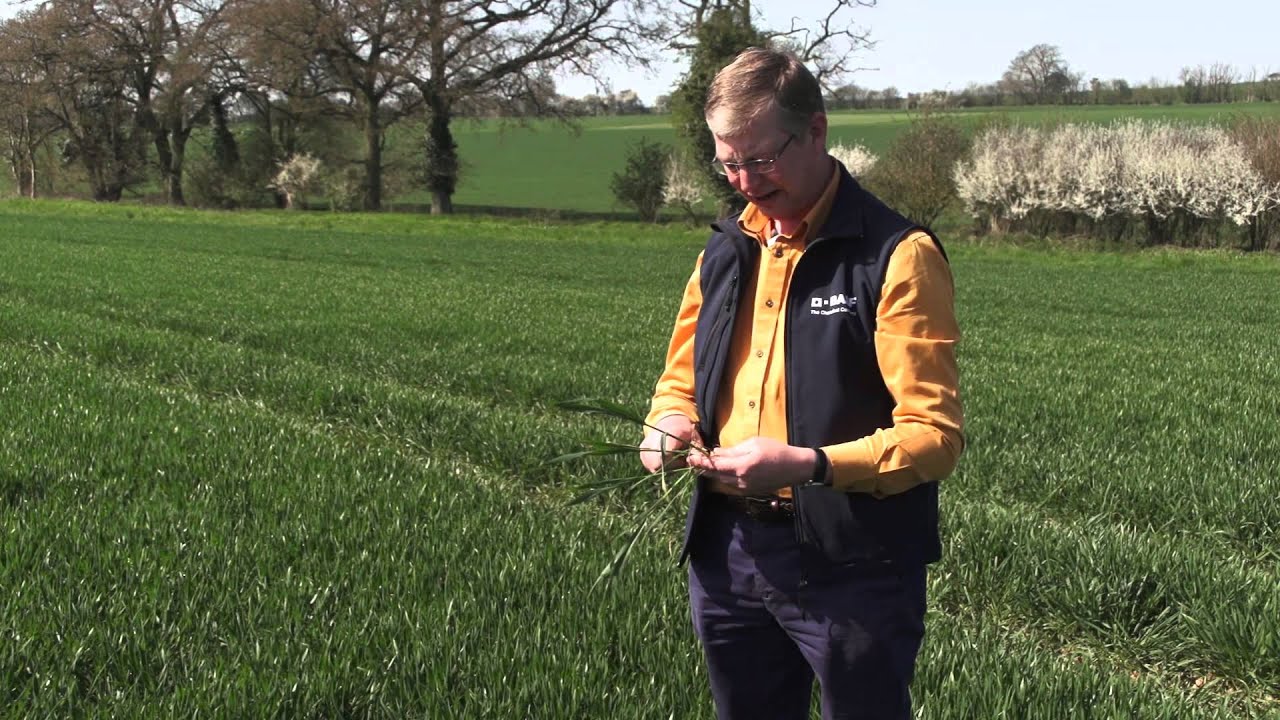
Click the image on the right, to watch a short six minute video of BASF's, Ben Freer giving practical advice on identifying the key growth stages in wheat and when to apply fungicide for optimum results.
This element above contains content from Youtube and transmits data to Youtube. You can block this in the privacy policy.
T0 Wheat Timing / Growth Stage
.
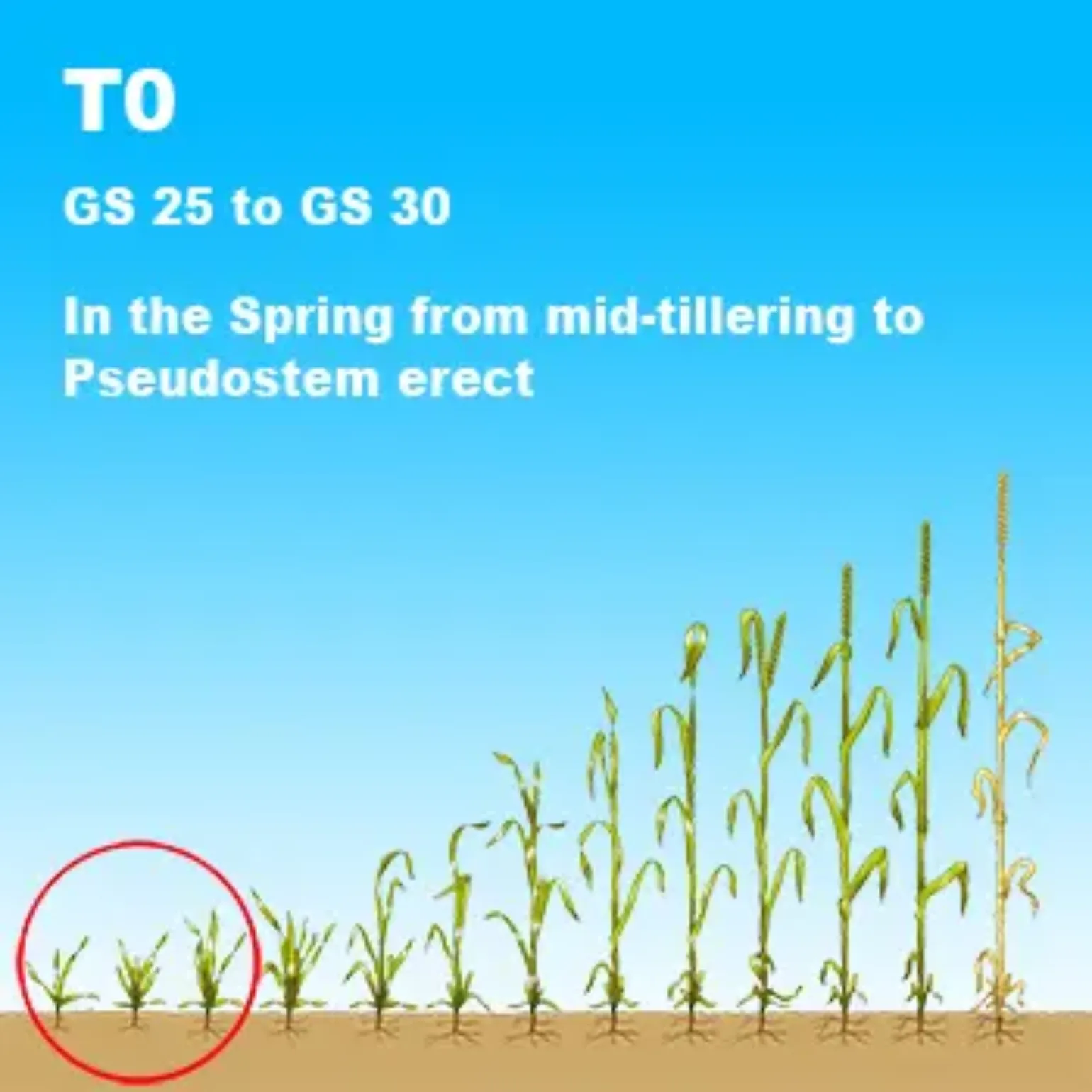
GS 20 describes tillering: the number after the 2 represents the number of tillers. So GS 23 would describe main shoot, plus three tillers; GS 25 is main shoot, plus five tillers. From any number of tillers, the plant can then move straight to GS 30, which is termed ear at 1 cm, or early stem extension.
Check crops either by carefully peeling back the leaves to reveal the ear stump, or by cutting through the stem with a sharp knife to expose the ear.
Measure the distance between the top of the ear and the basal node where the lowest leaves are attached; GS 30 is when this distance is 1 cm or more.
T0 Solutions
.
Farmer's Weekly Spring Fungicides Masterclass
View more
Cereal Disease Control Solutions
Next
T1 Wheat Timing / Growth Stage
People who viewed this page also viewed...
.