Managing late sown crops & resistance management
Key points:
- Managing late sown crops – later drilling does not necessarily mean low yield potential
- T0 focus on yellow rust and mildew this year
- Correct leaf emergence ID will be crucial at the T1 timing
- Using the strongest chemistry at the correct dose is crucial for resistance management
- 1 l/ha CTL (500g) should be used for as long as legally possible.
Managing late sown crops
It is a self-fulfilling prophecy that if you write off late sown crops as having low potential and manage them accordingly that you will end up with a low yielding crop. If these crops are managed well, then there is no reason why they should not deliver reasonably – maybe not to their full yield potential that would have been achievable from being sown in October but certainly combined with the inevitable increase in grain price, returns per hectare could well be similar.
A survey of crops from harvest 2001 (following the 2000 autumn which still holds the record for being the wettest on record) showed that yields, even from late January can be as good as those sown earlier if managed well and not muddled into mud.
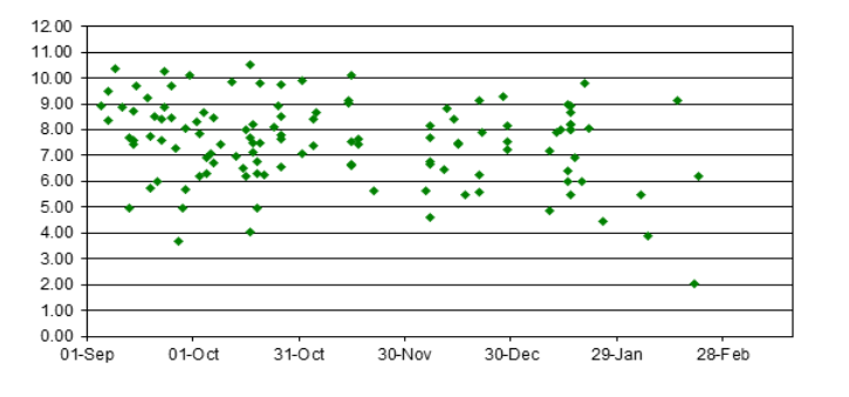
Figure 1. Source: Morley Members Bulletin, No.140., 2001. Survey of 170 crops sown between Sept 2000 and Feb 2001. Reproduced with kind permission of the Morley Agricultural Foundation
End of tillering/GS30 T0
In many cases a T0 will only be justified if yellow rust and/or mildew are present. At this timing it is far more important to ensure the crop has an adequate supply of nitrogen as well as PGR to maintain tillers.
GS 31-GS32 T1
Given the season, later drilled cereals will move through growth stages more quickly than usual, therefore the main watch as we approach this timing will be what the true growth stage is. Late sown crops will have produced far fewer leaves over winter and may visually look sparse. However, crop development is largely driven by day length (modified to some extent by temperature), and so stem extension and final leaf three emergence can occur in deceptively small plants. Careful dissection is required to determine which leaf layer has emerged in mid-April – not reliance on nodes. Final leaf three can emerge at GS31 (rather than the normal GS32). This can have important consequences of PGR application.
GS 39 T2
There is no reason to believe that by this time that the crop’s developmental stage will be far off normal and that the flag leaf will emerge around the same time. The disease epidemic may be slightly delayed but at this time it is impossible to know what the spring weather will be.
Resistance management
The decline in the efficacy of older azoles and the SDHIs was very noticeable in 2019 largely due to the higher disease pressure. Looking at the data, the biggest slip in efficacy, particularly in the SDHIs, actually occurred in 2018. It was just harder to see in the field as there was less disease about.
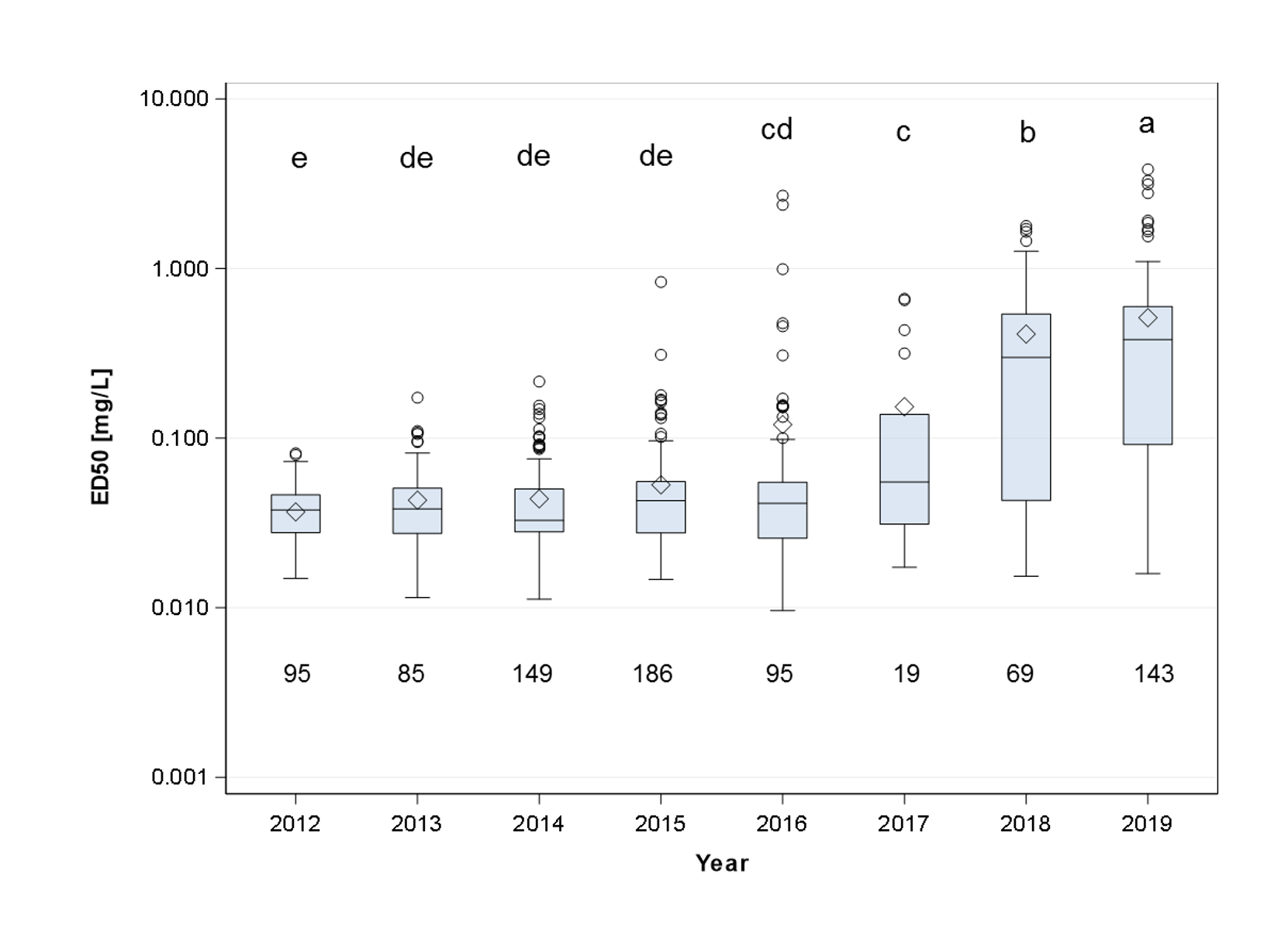
Figure 2: SDHI adaptation 2012-2019. Source: BASF routine monitoring
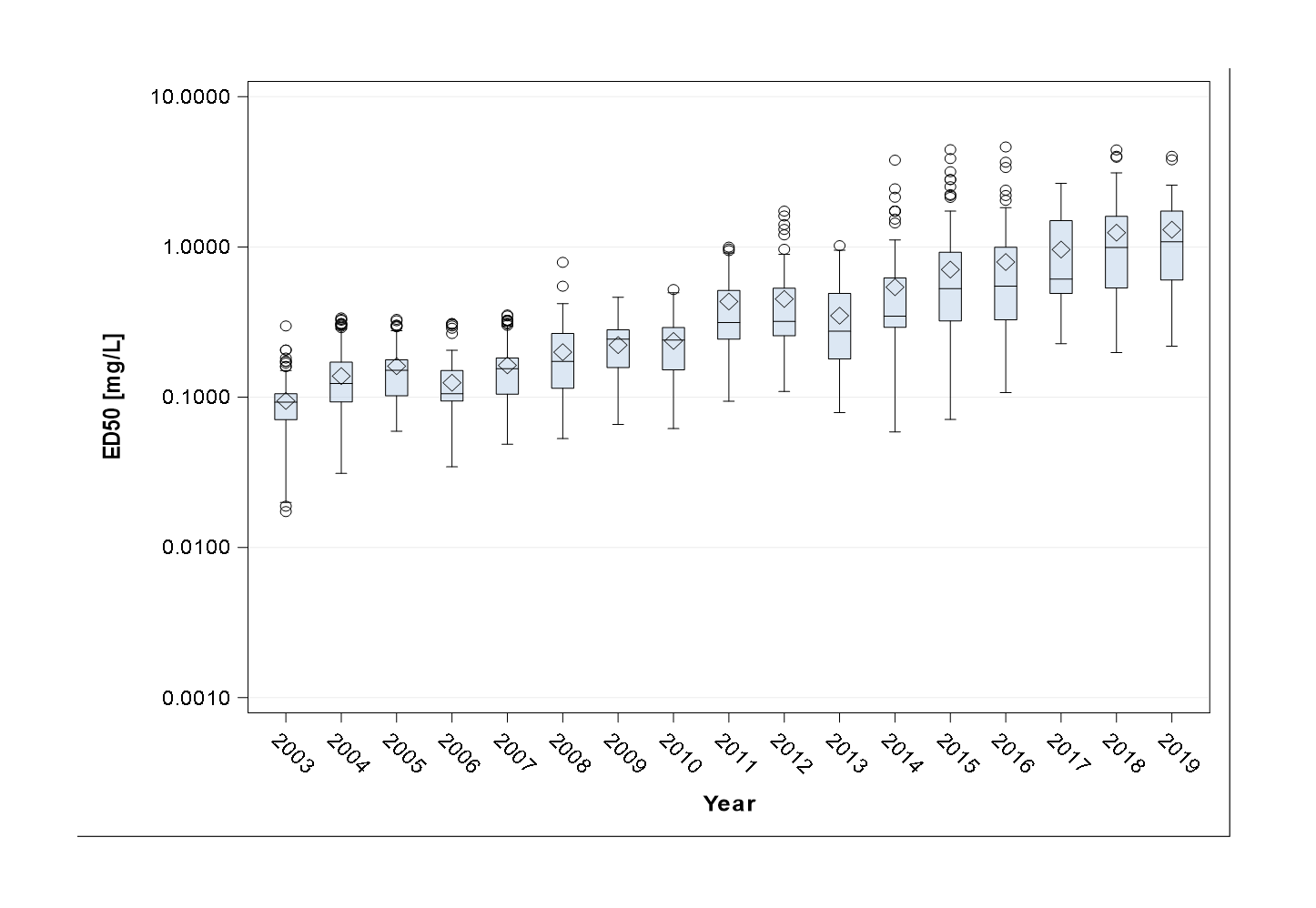
Figure 3: Azole adaption 2003-2019. Source: BASF routine monitoring by EpiLogic
With the withdrawal of chlorothalonil (CTL) on 20 May 2020, concern over the protection of other modes of action (MoAs) is becoming a major talking point. A pragmatic approach must be taken about this. FRAC/FRAG guidelines emphasise the need for the use of appropriate doses and that the differing MoAs need to be balanced in their efficacy. With the introduction of new cereal fungicide Revystar XE (see description in box below), this is now possible again. Older azoles have continued to decline in efficacy and are giving sub-optimal support/protection to the SDHIs. The new azole Revysol brings back that support, showing efficacy even against adapted strains of Septoria. The use of a multi-site such as chlorothalonil, which is clearly showing efficacy against Septoria, should be continued for as long as possible (i.e. up to 20 May 2020). After its withdrawal, the jury is still out as to the value/contribution alternative multi-sites are bringing to the party.
Revystar® XE provides the strongest option for Septoria control this year, which is balanced in efficacy between the two modes of action. The combination of the two active ingredients Revysol and Xemium® give better Septoria control (and yield) than the individual constituents would supply alone; i.e. there is a synergistic effect from using them together. This balanced design of Revystar® XE is crucial for protecting both modes of action going forwards, whilst delivering the strongest return on investment for the farmer.
Disclaimer Revystar® XE and Revysol® are registered trademarks of BASF. Revystar® XE contains Revysol® and Xemium®. Revysol® contains mefentrifluconazole. Xemium® contains fluxapyroxad. Always read the label and product information before use. For further product information including warning phrases and symbols, you can refer to agricentre.basf.co.uk
© BASF 2019 | All rights reserved.