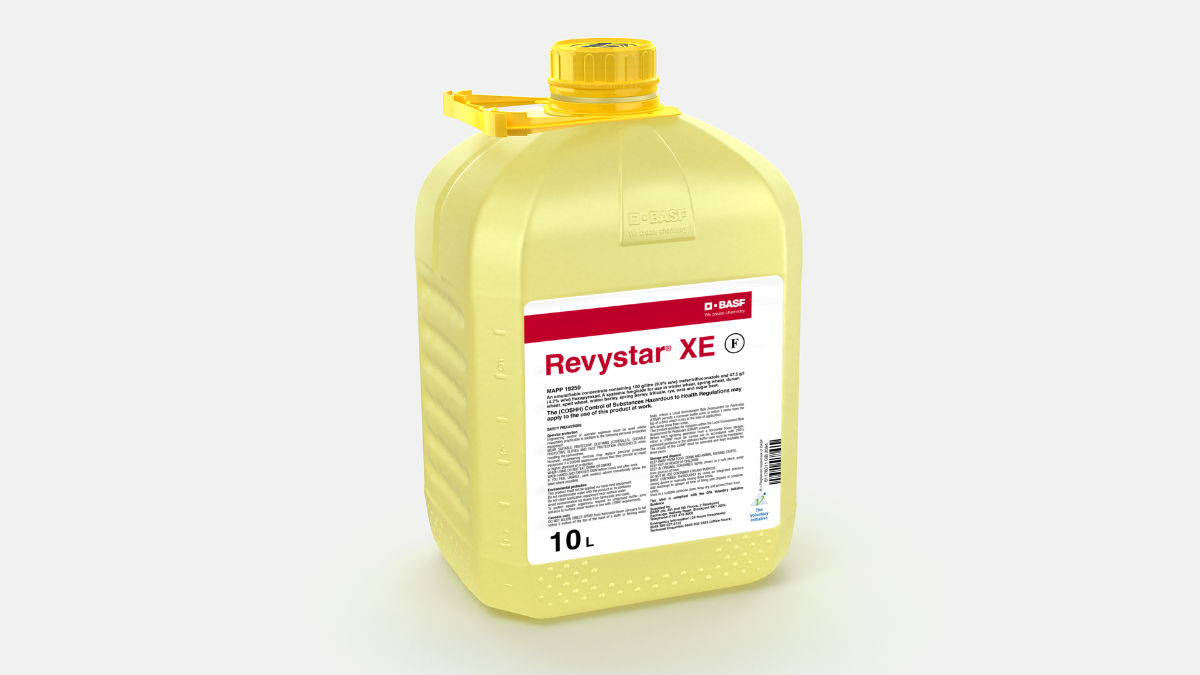
Combatting resistant strains
In comparison with SDHIs and strobilurins, which tend to see a step-change in performance, resistance to azoles is more gradual but none have maintained their efficacy like Revysol. That, says Matt, is due to the molecule’s unique structure.
“Revysol was the first, and is the only, isopropanol triazole in the market,” he says. “It is different, and that is what is needed when combatting resistant strains.”
The isopropanol part of the Revysol molecule flexes. This pliable hook allows the molecule to assume different positions and to bind with the fungal pathogen’s target enzyme.
“In short, Revysol binds quicker, stronger and better than any other triazole,” explains Matt. “Its flexible molecule is especially valuable when controlling shifted strains where the binding site has changed, and older triazoles can’t attach anymore,” he adds.
Safeguarding solutions
As well as protecting the performance of Revystar XE, this feature enables Revysol to protect other fungicides in the programme.
“Tebuconazole and prothioconazole have limited ability to control shifted strains. Revysol, however, is still effective and does the heavy lifting which reduces both the pressure and exposure on higher resistance risk actives, extending their lives,” says Matt.
“Newer SDHIs like isoflucypram and pydiflumetofen, are mixed with prothioconazole. It is this newer chemistry (SDHIs) that is doing the ‘heavy lifting’ and subsequently is not being protected. This is also the case in older chemistry that is reliant on SDHIs.
“AHDB’s 2025 dose response curves shows how this can affect the efficacy of higher resistance risk products if it is not managed elsewhere within the programme.”
Steve recommends the inclusion of at least one Revysol application in all UK wheat spray programmes to help safeguard solutions and to deliver sustainable control.