Caryx
A flexible and impressive plant growth regulator for autumn and spring use in winter oilseed rape.
Early-drilled crops are on the whole still ‘with us’ but it will be a watching brief as to how many CSFB larvae move from the petioles into the main stem in February and March. The extent of damage will become clear at stem extension.
Larval feeding reduces the stem strength and increases lodging risk. ADAS report that lodging was higher than average in 2019 - a wet June and larval feeding damage may have contributed to this
In severe cases, the growing point can be destroyed by larvae, but plants may re-branch from the base if it’s a fertile site and plants are well-rooted.
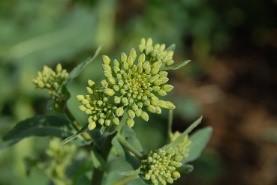
In crops which grow away relatively normally at stem extension, Caryx will reduce lodging risk. It will also encourage secondary branching to compensate where the terminal raceme or primary branch is weakened.
Where crop development is under question, monitoring crops through March will be key, comfortable in the knowledge that Caryx can be applied up to yellow bud. Yellow bud timing will have the strongest effect on secondary branching, and likely to be of particular benefit to these crops.
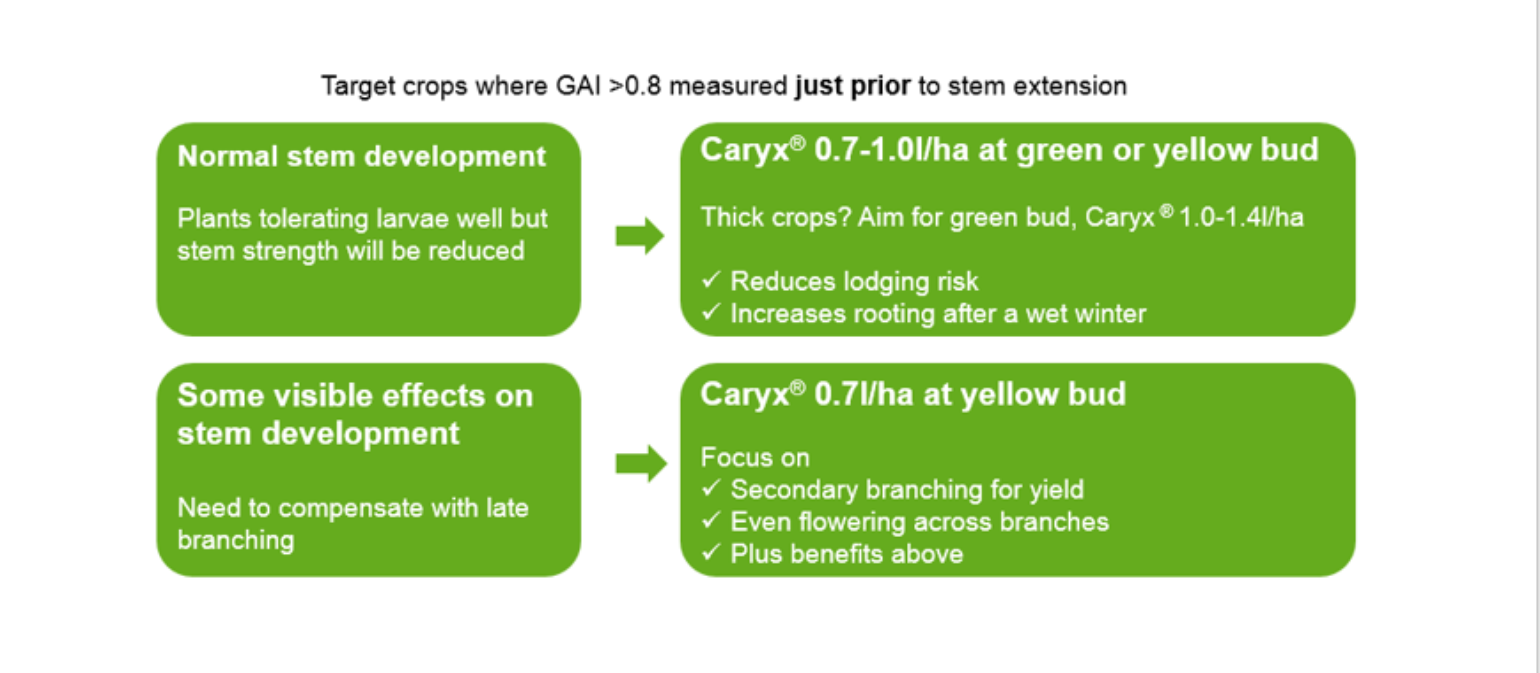
CSFB defence tactics such as early drilling, higher seed rates, spring vigour (through variety choice or early N), will also lend themselves to over-sized canopies. It might be worth taking a look at those crops at seed-fill to judge how the canopies have turned out.
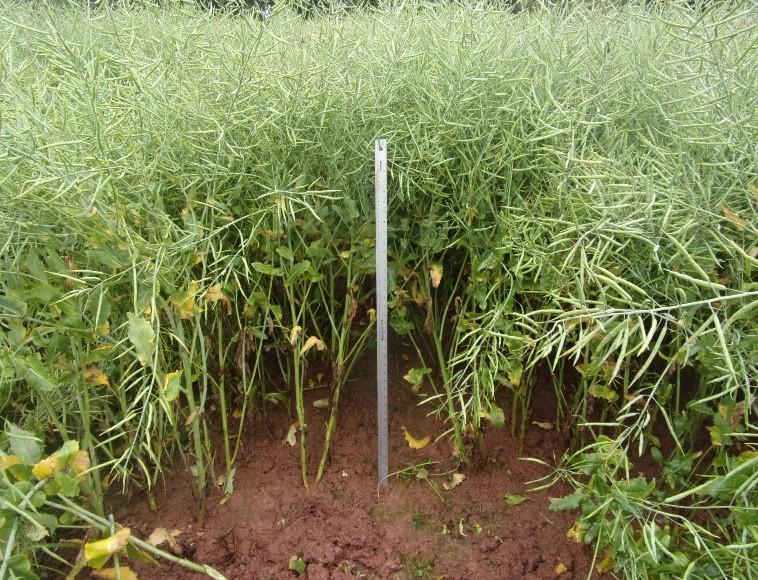
Ideal GAI = 3.5-4 - Lots of green leaves at seed-fill
Use plant protection products safely. Always read the label and product information before use. For further product information including warning phrases and symbols refer to www.agricentre.basf.co.uk. For further information, please do not hesitate to contact your local BASF Agronomy Manager or the BASF Technical Services Hotline: 0845 602 2553
Caryx is a registered trademark of BASF. Caryx contains metconazole and mepiquat chloride.