
Mould, Grey [Botrytis cinerea]


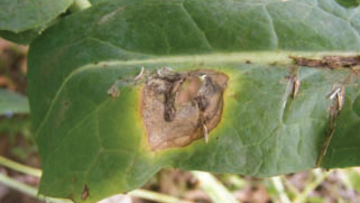
The pathogen has a large range of hosts and rapidly develops resistance. Botrytis rot can spread very rapidly to healthy fruit and therefore cause great damage in a short time.
About the pest
Description
Botrytis has a very wide host range. Disease development is usually associated with predisposing factors such as scorch or damage to foliage, adverse growing conditions or wet weather at flowering.
Symptoms & Diagnosis
Pattern of damage
Brown soft rots or leaf spots with tufts of grey sporulating fungal growth are the most common symptoms. Scorch caused by frost, chemical or fertilisers are rapidly colonised by grey mould and a progressive rot develops unless conditions are sufficiently dry for the infected tissues to dry out. Stem rots during stem extension and flowering are often associated with nitrogen fertiliser scorch. Stem lesions are white to greyish brown and can be difficult to distinguish from sclerotinia stem rot unless grey mould is sporulating on the lesion. Grey leaf spots and more extensive leaf rots occur where petals adhering to the foliage enable grey mould to become established. The leaf lesions may show concentric zones and be difficult to distinguish from target spots caused by Alternaria spp. Individual pods may be completely covered in sporulating grey mould. This is usually associated with damage from pests such as bladder pod midge.
Life Cycle
Air-borne spores of the grey mould pathogen are ubiquitous. It is present in decaying plant residues within the crop and surrounding areas. It can develop rapidly given favourable warm and wet or humid conditions. Flowers are frequently colonised and fallen petals develop grey mould whilst on the leaves or on the ground.
Treatment
Prevention
Many of the commonly used fungicides have useful activity against grey mould. Fungicide treatments applied for sclerotinia at early to mid-flowering give useful control
Remarks
Grey mould can cause some loss of plants when it affects the stem. There may be significant losses if scorch to the crop has been severe. Losses are small if only a few scattered plants or pods are affected. In the north and Scotland, leaf damage is considered important.