Which herbicides can be used to control scentless mayweed?
Use our product search tool to find your solution:
Weed profile of the Scentless mayweed (Tripleurospermum inodorum). Discover growth habits, herbicide resistance and impact in UK cereal production.
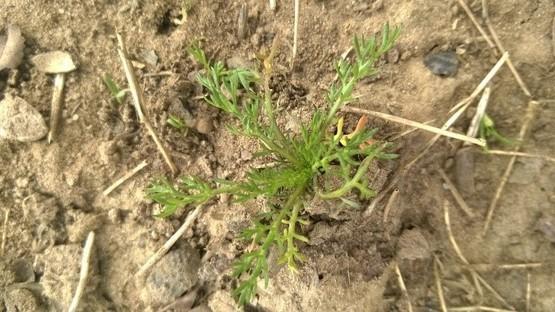
Scentless Mayweed can cause problems in winter and spring sown crops due to its long germination period. This weed grows rapidly and competes strongly with crops. Dense populations can smother and severely restrict crop growth so it needs to be controlled.
It is an annual dicotyledon and grows 10 to 80cm tall.
Scentless Mayweed Fact Sheet
| Leaves and flowers | Fine feather type green leaves. The flower is white and resembles a daisy. |
| Number of seeds produced per plant | 10,000 - 200,000 |
| Seed shed | August to October |
| Germination period | All year, with peaks in autumn and spring |
| Germination depth | Up to 5cm (generally much more shallow) |
| Primary dormancy | None |
| Does it have a secondary dormancy? | Transient |
| Seed longevity | 5 years |
| Factor promoting germination | Light |
| Rate of seed decline with cultivations | 43% annually |
| Geographical location | Scentless mayweed is the most widespread of the mayweed family found on arable land. It can be plentiful on arable land, predominantly in lowland areas. It thrives in open habitats and in less disturbed soils. |
| Soil Type | Prefers heavy and fertile soil types particularly warmer areas where pH > 4.5 and preferable >5.5. |
| Impact | Mayweed is competitive in both spring and winter sown cereals taking yield but it can also cause problems at harvest with blocked machinery and contaminating seed samples. 15 plants m2 = 5% yield loss in cereals. |
| Herbicide resistance | ALS TSR |